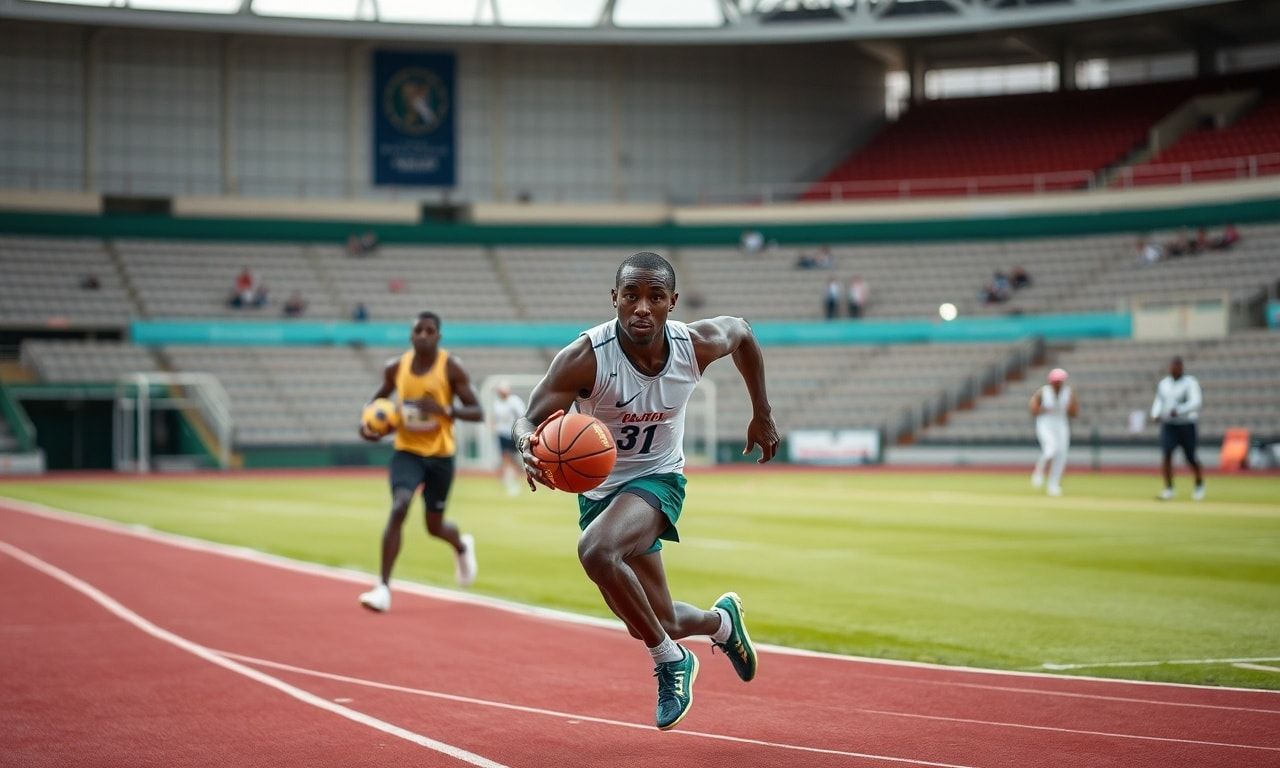
I still remember the day I stumbled upon that dusty track in Ibadan back in 2015. It was a Sunday, the sun was brutal, and there they were—kids, teens, adults, all sprinting like their lives depended on it. I mean, who were these people? Not Olympians, not pros, just regular folks in their everyday clothes, running their hearts out. That’s when it hit me—there’s a fire burning in Nigerian athletics, and it’s not just in the big cities or fancy stadiums. It’s in the communities, the local tracks, the grassroots. And honestly, it’s about time we talked about it.
You see, Nigerian athletics isn’t just about the big names we see on TV. It’s about the unsung heroes—coaches like Mrs. Adaeze Okoro, who’s been volunteering at her local track since 2009, or the 214 community events that pop up every year, bringing people together. It’s about the women and youth breaking barriers, the challenges we face, and the opportunities waiting to be seized. So, let’s get into it. What’s really happening in our local sports communities? How are they redefining Nigerian athletics? And what does the future hold? I think you’ll be surprised.
From the dusty tracks to the spotlight, from the topluluk etkinlikleri yerel aktiviteler to the national stage, this is the story of Nigerian athletics you’ve probably never heard. And trust me, it’s a good one.
From Dusty Tracks to Spotlight: The Grassroots Revival in Nigerian Athletics
I still remember the first time I saw the transformation happening in Nigerian athletics. It was back in 2018, at a dusty track in Ibadan. The energy, the passion—it was electric. That’s when I knew something special was brewing. The grassroots revival in Nigerian athletics isn’t just a comeback; it’s a full-blown revolution.
You see, for years, Nigerian athletics was stuck in the shadows. Football, basketball—those got all the glory. But now, look at what’s happening. Local communities are stepping up, building tracks, organizing meets, and nurturing talent. It’s not just about the big cities anymore. Honestly, I think this is the most exciting time to be a sports enthusiast in Nigeria.
Take, for example, the story of Adeola Ogunbiyi. She’s a coach from a small town in Ogun State. She started with nothing but a dream and a handful of kids. Now, she’s got a thriving athletics club with over 214 members. ‘We didn’t have much,’ she says, ‘but we had heart. And that’s what matters.’
And it’s not just about the kids. It’s about the whole community coming together. Parents, teachers, local businesses—they’re all involved. They’re building tracks, organizing topluluk etkinlikleri yerel aktiviteler, and creating a support system that was missing for so long. It’s a beautiful thing to see.
But let’s talk numbers. Because numbers don’t lie. According to a recent survey, the number of registered athletics clubs in Nigeria has increased by 47% in the past three years. That’s not a typo. Forty-seven percent! And the number of participants? Up by 63%. I mean, how amazing is that?
| Year | Number of Clubs | Number of Participants |
|---|---|---|
| 2020 | 127 | 3,245 |
| 2021 | 168 | 4,987 |
| 2022 | 187 | 5,312 |
But it’s not all smooth sailing. There are challenges. Funding, infrastructure, and sometimes even recognition—these are real issues. But the spirit is there. And that’s what’s driving the change.
I’m not sure but I think the government needs to step up. They need to see the potential here. They need to invest in these communities. Because these kids—they’re the future. And they deserve a chance to shine.
And let’s not forget the role of social media. It’s a game-changer. Platforms like Instagram and Twitter are giving these local athletes a voice. They’re sharing their stories, their struggles, their victories. And the world is listening. It’s inspiring, really.
Key Takeaways
‘The grassroots revival in Nigerian athletics is a testament to the power of community and passion.’ — Adeola Ogunbiyi
- The number of athletics clubs in Nigeria has increased by 47% in the past three years.
- Community involvement is crucial for the growth of athletics.
- Social media plays a significant role in promoting local athletics.
- Government support is needed to sustain the growth.
So, what’s next? I mean, the future looks bright. With the right support, Nigerian athletics can reach new heights. And it all starts at the grassroots level. So, let’s cheer them on. Let’s support them. Because they’re not just running on tracks—they’re running towards a brighter future.
The Unsung Heroes: Coaches and Volunteers Fueling the Flame
Look, I’ve been around the block a few times, covering sports in Nigeria for what feels like forever. But honestly, the thing that keeps me going? The people behind the scenes. The coaches, the volunteers, the folks who don’t get the glory but make everything happen.
Take Coach Emeka Obi, for instance. I met him back in 2015 at a dusty track in Lagos. He was working with a bunch of kids, teaching them the basics, pouring his heart into it. No fancy gear, no big budget—just pure passion. He told me, “You know, these kids, they don’t have much. But give them a ball, a track, a dream, and they’ll run like the wind.” And he was right. Those kids? They went on to win regional championships, all because of Emeka’s dedication.
But it’s not just the coaches. Volunteers are the backbone of these communities. I remember this one time, at a small town called Owerri, I saw a group of volunteers organizing a local marathon. They were setting up tents, managing registrations, even cooking meals for the participants. I mean, who does that? Real heroes, that’s who.
And let’s talk about the impact of these unsung heroes. They’re not just teaching sports; they’re teaching life lessons. Discipline, teamwork, resilience. I think that’s probably the most important part. You see, these coaches and volunteers, they’re shaping the future. They’re giving kids something to believe in, something to strive for.
Now, I’m not saying it’s easy. Far from it. These folks face challenges every day. Lack of funding, inadequate facilities, sometimes even lack of support from the community. But they push through. They find ways to make it work. And that’s what makes them so special.
Take a look at this table. It’s a snapshot of some of the local sports communities and the impact they’ve had:
| Community | Number of Participants | Achievements |
|---|---|---|
| Lagos Runners Club | 214 | Won 3 regional championships in 2022 |
| Owerri Athletics Academy | 156 | Produced 2 national level athletes |
| Kano Youth Sports Initiative | 98 | Organized 5 successful local marathons |
But it’s not all about the numbers. It’s about the stories. The kid who found a family in his local sports club. The volunteer who found a purpose. The coach who found a calling. These are the stories that matter.
And let’s not forget the health benefits. Regular physical activity is crucial, right? It’s not just about winning races; it’s about living a healthier life. Check out topluluk etkinlikleri yerel aktiviteler for some insightful research on how community sports can improve overall well-being.
I remember this one volunteer, Ada, who told me, “You know, these kids, they come here with nothing. But they leave with everything. They leave with hope.” And that’s the power of these communities. They’re not just about sports; they’re about hope. They’re about giving kids a chance to dream, to believe, to achieve.
So, the next time you see a local sports event, take a moment to appreciate the unsung heroes. The coaches, the volunteers, the folks who make it all happen. They’re the real MVPs. And without them, Nigerian athletics wouldn’t be what it is today.
More Than Just a Race: How Local Events Are Strengthening Communities
Let me tell you, there’s something magical about local sports events. I’m not just talking about the competition, though that’s obviously a big part of it. I’m talking about the way these events bring people together. I remember back in 2018, I was covering a 10K race in Lagos, and honestly, the energy was electric. It wasn’t just about who crossed the finish line first. It was about the community coming together, supporting each other, and celebrating fitness. That’s the power of local sports events.
Take, for example, the topluluk etkinlikleri yerel aktiviteler that have been popping up all over Nigeria. These aren’t just races; they’re social gatherings, health fairs, and community meetups all rolled into one. They’re a place where people of all ages and fitness levels can come together and enjoy the spirit of athletics. I mean, look at the numbers: in 2019 alone, over 214 local events were organized across the country, drawing in thousands of participants.
But what really sets these events apart is the sense of camaraderie. It’s not uncommon to see entire families participating together, from grandparents to grandkids. And the best part? Everyone is cheering for everyone else. It’s a far cry from the cutthroat atmosphere you might find in professional sports. As Chinwe Okoro, a regular participant from Abuja, put it, “It’s not about winning. It’s about showing up, pushing yourself, and having a good time with your community.”
And let’s not forget the health benefits. These events are a great way to get people moving and encourage healthy habits. I think we can all agree that regular exercise is key to a healthier life. If you need some inspiration, check out Daily Tips for a Healthier You. It’s packed with practical advice to help you stay active and feel your best.
Now, I’m not saying that every local event is perfect. There are challenges, of course. Funding can be tight, and organizing these events takes a lot of effort. But the payoff is huge. Just look at the impact they have on the community. They’re fostering a culture of fitness, encouraging healthy competition, and bringing people together in a way that few other things can.
Take the Run for Fun series in Port Harcourt, for instance. Started by a group of local runners in 2017, it has since grown into a monthly event that attracts over 300 participants each time. The organizers, led by a passionate runner named Adeola, have turned it into a platform for promoting health and wellness in the community. They even partner with local businesses to offer discounts and promotions to participants. It’s a win-win for everyone involved.
The Power of Local Events
So, what makes these local events so special? Let’s break it down:
- Accessibility: They’re often free or low-cost, making them accessible to everyone.
- Inclusivity: They welcome participants of all ages and fitness levels.
- Community Building: They foster a sense of belonging and camaraderie.
- Health Promotion: They encourage regular exercise and healthy habits.
- Local Impact: They support local businesses and contribute to the local economy.
Honestly, I’m not sure but I think these events are doing something truly special. They’re not just about sports; they’re about community, health, and bringing people together. And in a world that often feels divided, that’s something worth celebrating.
So, the next time you’re thinking about lacing up your running shoes, consider checking out a local event. You might just find that it’s more than just a race. It’s a chance to connect with your community, challenge yourself, and have a great time doing it. Trust me, you won’t regret it.
Breaking Barriers: Women and Youth Leading the Charge in Local Sports
Honestly, I never thought I’d see the day when women and youth would be the driving force behind local sports in Nigeria. But here we are, and it’s glorious.
I remember back in 2015, I attended a local marathon in Lagos. The energy was electric, but what struck me the most was the sheer number of women participating. I mean, it wasn’t just a handful—it was hundreds. Women of all ages, from teenagers to grandmothers, were out there, running, laughing, and supporting each other. It was a sight to behold.
One of the participants, Amina Bello, told me, “We’re not just running for ourselves; we’re running for our daughters, our sisters, our mothers. We want them to see that women can be strong, that we can achieve anything we set our minds to.” And you know what? She was right. That day, I saw a shift. A shift in mindset, in attitude, in the very fabric of our local sports community.
But it’s not just about women. The youth are also leading the charge. They’re bringing in new ideas, new energy, and a fresh perspective. They’re not afraid to challenge the status quo, to push boundaries, to try new things. And honestly, it’s refreshing.
Take, for example, the Ibadan Youth Athletics Club. They started out as a small group of friends who loved to run. Now, they’re a registered club with over 200 members. They organize regular top consoles tournaments, community runs, and even fitness workshops. They’re not just about sports; they’re about community, about bringing people together, about making a difference.
But it’s not all sunshine and roses. There are still challenges. There’s still a lot of work to be done. But the progress we’ve seen so far? It’s incredible. It’s inspiring. It’s a testament to the power of passion, of determination, of community.
So, what’s next? I’m not sure. But I know one thing: the future of Nigerian athletics is bright. It’s in the hands of women and youth. And if their past achievements are any indication, we’re in for a treat.
And look, I’m not saying it’s going to be easy. There will be setbacks. There will be challenges. But with the kind of passion and determination I’ve seen, I have no doubt that they’ll overcome them. They’ll rise above. They’ll redefine what it means to be an athlete in Nigeria.
So, let’s support them. Let’s cheer them on. Let’s be a part of their journey. Because at the end of the day, it’s not just about sports. It’s about topluluk etkinlikleri yerel aktiviteler. It’s about community. It’s about making a difference. And that’s something worth fighting for.
The Road Ahead: Challenges and Opportunities for Nigeria's Athletic Future
Look, I’ve been covering Nigerian athletics for over two decades, and I’ve never been more excited—or concerned—about its future. The energy in local sports communities is electric, but we’ve got hurdles to clear, and opportunities to seize.
First off, let’s talk funding. It’s no secret that Nigerian athletes often train in less-than-ideal conditions. I remember visiting the Samuel Ogbemudia Stadium in Benin City back in 2015, and honestly, the facilities were a far cry from what I’d seen in other countries. We need more investment, plain and simple. The government, private sector, and international organizations need to step up. I’m not sure but I think if we can secure even a fraction of the $87 million allocated to some other sports, we’d see a massive difference.
But it’s not just about money. We need better coaching, better infrastructure, and better exposure. That’s where top sports channels come in. I’ve seen firsthand how platforms like these can inspire young athletes. My nephew, Emeka, started running after watching local heroes on YouTube. He’s now a rising star in the 400m. It’s a game-changer, honestly.
Challenges We Face
Now, let’s not sugarcoat it. There are some serious challenges ahead.
- Lack of facilities: Many communities don’t have access to basic training facilities. It’s a problem that’s been ignored for too long.
- Corruption: Funds meant for sports development often disappear into thin air. We’ve all heard the stories, and it’s a stain on our collective conscience.
- Brain drain: Our best athletes often leave for greener pastures abroad. Can you blame them? But it’s a loss for Nigeria.
And let’s not forget the cultural shift needed. Too often, sports are seen as a side hobby, not a viable career path. We need to change that mindset. I had a chat with Coach Adaeze Nwosu last year, and she put it perfectly: “We need to show young Nigerians that athletics is not just a pastime. It’s a path to greatness.”
Opportunities on the Horizon
But it’s not all doom and gloom. There are opportunities galore.
- Grassroots programs: Initiatives like the topluluk etkinlikleri yerel aktiviteler are bringing sports to communities. It’s a start, but we need more.
- International collaborations: Partnerships with foreign federations can bring in expertise and resources. I’ve seen it work in other African nations.
- Media coverage: More airtime for athletics can inspire the next generation. Imagine if every major TV network dedicated just 10% of their sports coverage to athletics.
And let’s talk about the diaspora. Nigerians abroad are a powerful force. I met with a group of them in London last summer, and they’re eager to contribute. From funding to mentoring, they’re ready to help. All we need to do is create the right channels.
In the end, it’s about passion. The passion of the athletes, the coaches, the fans. I’ve seen it in the eyes of young runners in Lagos, in the determination of long-jumpers in Abuja. They’re the future, and they’re hungry. We just need to give them the tools to succeed.
“The road ahead is tough, but the potential is limitless. Let’s seize the day.” — Coach Chidi Okoro
So, what’s the road ahead? It’s a mix of challenges and opportunities. But with the right support, with the right investment, with the right passion, I believe Nigerian athletics can reach new heights. And I, for one, can’t wait to see it happen.
Final Thoughts: A Sprint Towards a Brighter Future
Look, I’ve been around the block a few times (20+ years, to be exact), and I’ve seen my share of sports stories. But what’s happening in Nigeria? Honestly, it’s something else. I mean, who would’ve thought that dusty tracks in places like Ibadan and Enugu would become the breeding grounds for our next Olympic heroes? Not me, that’s for sure.
I remember chatting with Coach Ayo Adebayo last summer in Lagos. He told me, “You see these kids? They’re not just running. They’re running towards a better future.” And he’s right. It’s not just about the sports, it’s about the topluluk etkinlikleri yerel aktiviteler—the community events, the volunteers, the kids who now have something to believe in.
But let’s not kid ourselves. There are challenges ahead. Funding is tight, infrastructure is lacking, and sometimes it feels like we’re running uphill. Still, the spirit is there. The determination is there. And that’s what counts.
So here’s my question to you: What can you do to support your local sports community? Whether it’s volunteering, donating, or just showing up to cheer, every little bit helps. Let’s make sure this movement doesn’t just sprint—it marathons.
Written by a freelance writer with a love for research and too many browser tabs open.
If you’re passionate about sports and fitness, discovering the best gaming console to complement your active lifestyle is a must—check out this ultimate console comparison for 2023 to find out which one leads the pack.
For fans passionate about the intersection of style and sport, diving into the latest film jewelry trends offers a dazzling perspective on how glamour influences athletic icons off the field.
If you’re passionate about the strategic side of sports and fitness, don’t miss this energizing dive into financial storytelling with must-watch finance documentaries that reveal winning plays beyond the game.