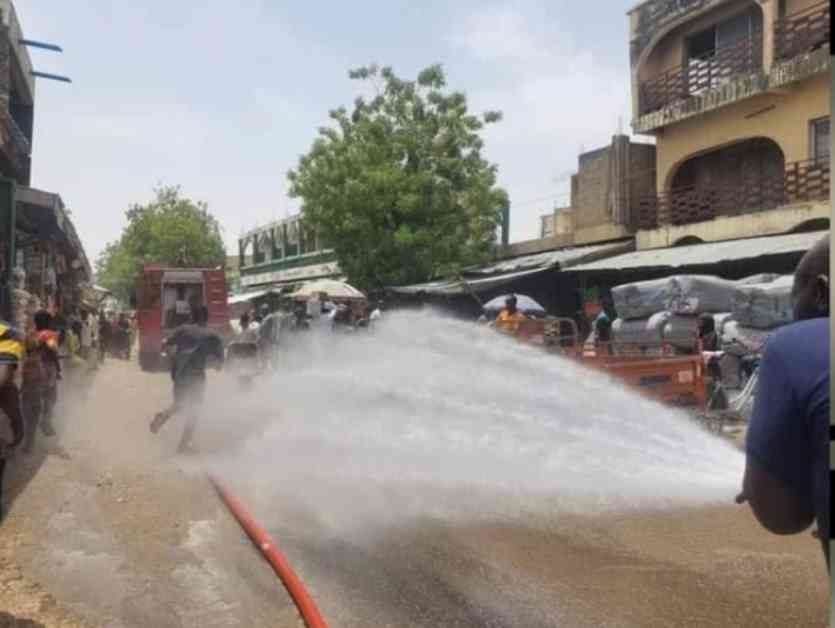
A devastating fire outbreak swept through the heart of the electronics market in Borno, leaving destruction in its wake. The inferno ravaged an electronic shop belonging to Mohammed Abba Malam, the esteemed Chairman of the Electronics Sellers Association, situated within the bustling Monday Market in Maiduguri, the capital city of Borno State. Witness accounts reveal that the blaze erupted at approximately 7 pm on a fateful Monday evening, engulfing a vast array of valuable home appliances with financial losses amounting to millions of naira.
The Flames and the Heroes
In the midst of chaos and despair, the courageous efforts of the Borno State Police Command shone brightly. Upon receiving a distress call, the police swiftly mobilized their forces to the scene, spearheaded by the diligent Deputy Superintendent of Police, Yakubu Muhammad. Their primary mission was to secure the area, preventing looting and ensuring the safety of both property and lives amidst the raging flames. Working in tandem with the local fire service, these valiant responders managed to contain and extinguish the fire, preventing further devastation.
ASP Nahum Daso, the official spokesperson for the Borno State Police Command, shed light on the harrowing events that unfolded. He confirmed the extensive damage inflicted upon the Chairman’s shop, the epicenter of the calamity, emphasizing that no casualties were reported. The resilience and coordination displayed by the police force in partnership with the fire service underscored the unwavering commitment to protecting the community in the face of adversity.
The Aftermath and Unanswered Questions
While the immediate danger subsided with the successful quenching of the flames, unanswered questions lingered in the aftermath of the disaster. The cause of the fire, a mystery waiting to be unraveled, left a lingering sense of unease among the denizens of the market. Furthermore, the true extent of the property losses incurred during the blaze remained a matter of speculation, awaiting a comprehensive assessment to quantify the financial toll of the tragedy.
Hassan Abdullahi, a local trader deeply entrenched in the vibrant marketplace of Maiduguri, recounted the frantic moments that transpired as the fire threatened to consume the livelihoods of many. He attested to the rapid response and decisive actions taken by the police and fire service personnel, averting a potentially more catastrophic outcome. Abdullahi’s firsthand perspective offered a poignant narrative of resilience and community spirit amidst the backdrop of devastation, highlighting the unwavering human spirit in times of crisis.
As the sun rose on the charred remnants of the once-thriving electronics market, a sense of somber reflection permeated the air. The scorched remains of the Chairman’s shop stood as a stark reminder of the fragility of life and livelihoods in the face of unforeseen calamities. The resilience and unity displayed by the community in the wake of tragedy served as a beacon of hope, illuminating the path towards recovery and renewal.
In the quest for answers and closure, the state fire service stood as a beacon of expertise and authority. Despite efforts to reach out for a comprehensive post-fire assessment, their silence echoed a profound sense of mystery and anticipation. The final pieces of the puzzle remained elusive, awaiting the meticulous scrutiny and analysis of experts to unveil the truth behind the destructive blaze that had cast a shadow over the vibrant tapestry of Maiduguri’s bustling marketplace.
In the wake of devastation, the human spirit prevailed, forging bonds of solidarity and resilience that transcended the ashes of loss and destruction. As the community rallied together to rebuild and reclaim what was lost, the spirit of hope burned brightly, illuminating the path towards a brighter tomorrow. The flames may have scorched the physical landscape, but the indomitable spirit of Maiduguri’s inhabitants remained unbroken, a testament to the enduring power of human resilience in the face of adversity.